
We cherish when philanthropic surprises lift our spirits and reinforce what our mothers taught us long ago: Doing the right thing is always doing the smart thing.
The most successful fundraisers think in terms of growing lifetime friendships with donors that might start modestly, but grow closer and deeper over time as passion, trust and capacity develop.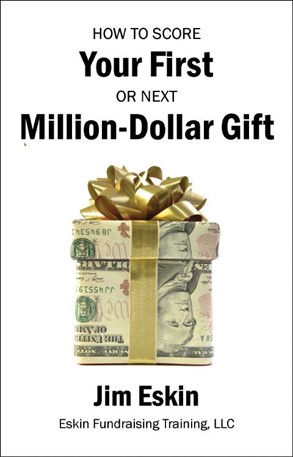 Consider the inspiring example that began with $100 gift to the Annual Fund in 1978 and culminated in a historic $100 million bequest from alumnus John W. Durstin to Georgia Tech Institute of Technology. This is the beauty of philanthropy.
Maybe not as dramatically, but there is plenty of research to back up that major gifts often start with small first-time donations. CCS dove deep into this subject by examining a human service that defines a major gift as a donation of $25,000 or more. Upon completing their analysis, CCS found that among the organization’s 732 major donors, 213 started with a first gift of less than $250. That means that almost 1 in 3 major donors were acquired as rather small donors.
They also studied how long it took for each of the 732 donors to start giving at the $25,000+ level. Patience is a virtue, especially in fundraising, and it can take significant time for the major gift conversion process to yield fruit.
- Approximately 48% of major donors took at least five years to start giving major gifts.
- Approximately 33% took at least 10 years.
- Approximately 7% took more than 20 years.
Whether the gift amount is $50 or $50,000 effective fundraisers embrace the art and science of fundraising and its four crucial phases — discovery, cultivation, solicitation and stewardship. In maturing major gift pipelines, stewardship — acknowledging and profusely thanking donors for their last gift — reigns supreme.
Make no mistake about it, stewardship is a prudent investment that pays handsome dividends. It is such a profoundly more efficient business model to keep current donors happy and engaged than the time and resource-consuming process of acquiring new donors.
Based on our experience training and consulting non-profits of all different missions, sizes and parts of the country, here are 10 recommendations to build, strengthen and refine your major gift pipeline.
No.1: Make it instinctive to treat all donors with respect, courtesy and professionalism: The first-time experience is crucial. The average donor retention rate across non-profits is approximately 45% to 50%. If you don’t keep donors engaged for a second year, dreams of a major gift pipeline are forfeited.
No.2: Understand donor motivations: A wonderful starting point is simply asking what appeals to the donor the most about the mission, and why? This will provide invaluable insights to continue to align values, priorities and needs to advance friendships.
No.3: Recognize that giving capacity needs time to grow: This is especially true for younger donors who are just starting careers and paying off student debts. It doesn’t mean that they don’t want to be engaged with your mission. Volunteering can be a perfect fit.
No.4: Discover communication preference: There are more and more channels to choose from. People have very different styles. Find out their favorite — it could be meeting in person when practical, videoconference, e-mail, text or social media. My personal favorite is the cell phone for both its convenience and immediacy.
No.5: Reports on results being achieved with gift dollars: How is the needle being moved in touching, improving and saving more lives, especially helping those who are struggling? Provide easy to understand benchmarks showing returns on philanthropic investments.
No.6: First-person stories and testimonials from beneficiaries tend to influence donors much more than facts and figures: You can get amazingly impressive results from producing impact videos from basic smartphones.
No.7: Continuity of development staff is huge: The constant revolving door of staff managing donor friendships erodes “trust capital.” It’s worth every dollar and then some to retain staff that donors know, like and trust.
No.8: Legacy giving enormously expands capacity: This is especially timely with an unprecedented $84 trillion wealth transfer from Baby Boomer (and Silent) generations projected by 2045. The most popular forms are wills and bequests, pension funds and life insurance policies. Concentrate on heightening the visibility of planned giving opportunities on all communication platforms and in donor conversations. The same applies to giving maximum attention to the exploding market of Donor Advised Funds (DAF) that represent a total of $255 billion in charitable assets and are growing every day.
No.9: Fear of under-asking is overrated: We recognize that many colleagues worry about leaving money on the table. If it is quickly apparent that the donor can contribute more robustly, just steward him or her like they gave the larger amount, and within a reasonable waiting period, solicit the larger gift.
No.10: So called little touches go a long way: For example, one of my colleagues always gets big smiles from her “to die for” chocolate chip cookies. When communicating with donors, my secret sauce is sending handwritten notes via snail mail. This will set you apart from everyone else.
Successful fundraisers prioritize lifetime donor value and ignore anything remotely resembling a one-time transaction. Philanthropy is driven by friendships that meet the test of time, bringing out the best in donors, non-profits and beneficiaries in a wondrous loop of joy.
About Eskin Fundraising Training
 After a successful career leading advancement for three institutions of higher education, Jim Eskin’s consulting practice, Eskin Fundraising Training, launched in 2018, builds on the success of more than 250 fundraising workshops, webinars, webcasts, podcasts and board sessions, and provides the training, coaching and support services to equip non-profit leaders to replace fear of fundraising with comfort and confidence. He has authored more than 150 guest columns that have appeared in daily newspapers, business journals and blogs across the country. He publishes Stratagems, a monthly e-newsletter exploring timely issues and trends in philanthropy. Sign up here for a free subscription. You will also receive invitations to free virtual learning community programs. He is author of 10 Simple Fundraising Lessons, an 82-page common sense guide to understanding the art and science of fundraising, and How to Score Your First or Next Million-Dollar Gift, 104 pages filled with strategies, best practices and homework assignments to unlock exciting opportunities that elevate organizational impact to the next level. Both are available in print and digital formats through Pathway, the book distributor, and Amazon. Quantity discounts are available to non-profits who want to share books with teams of management, development staff, board and volunteers. Eskin is also available for customized virtual training for boards, staff, and fundraising committees. His newest customized service, Fundraising Urgent Care, offers 48-hour turnaround in addressing general strategy and tactical challenges that require immediate responses.
FOR MORE INFORMATION:
Jim Eskin
Founder
Eskin Fundraising Training
10410 Pelican Oak Drive
San Antonio, TX 78254-6727
Cell: 210.415.3748
E-Mail: jeskin@aol.com
www.eskinfundraisingtraining.com